

.svg)
airy” is an antiquated insult for effeminacy, but it hasn’t always been a homophobic slur. A century ago, self-identified “fairies” were broadly recognized as neither men nor women, but rather, a “third sex.” They were out-and-proud sex workers and entertainers, not just tolerated but celebrated within their communities.
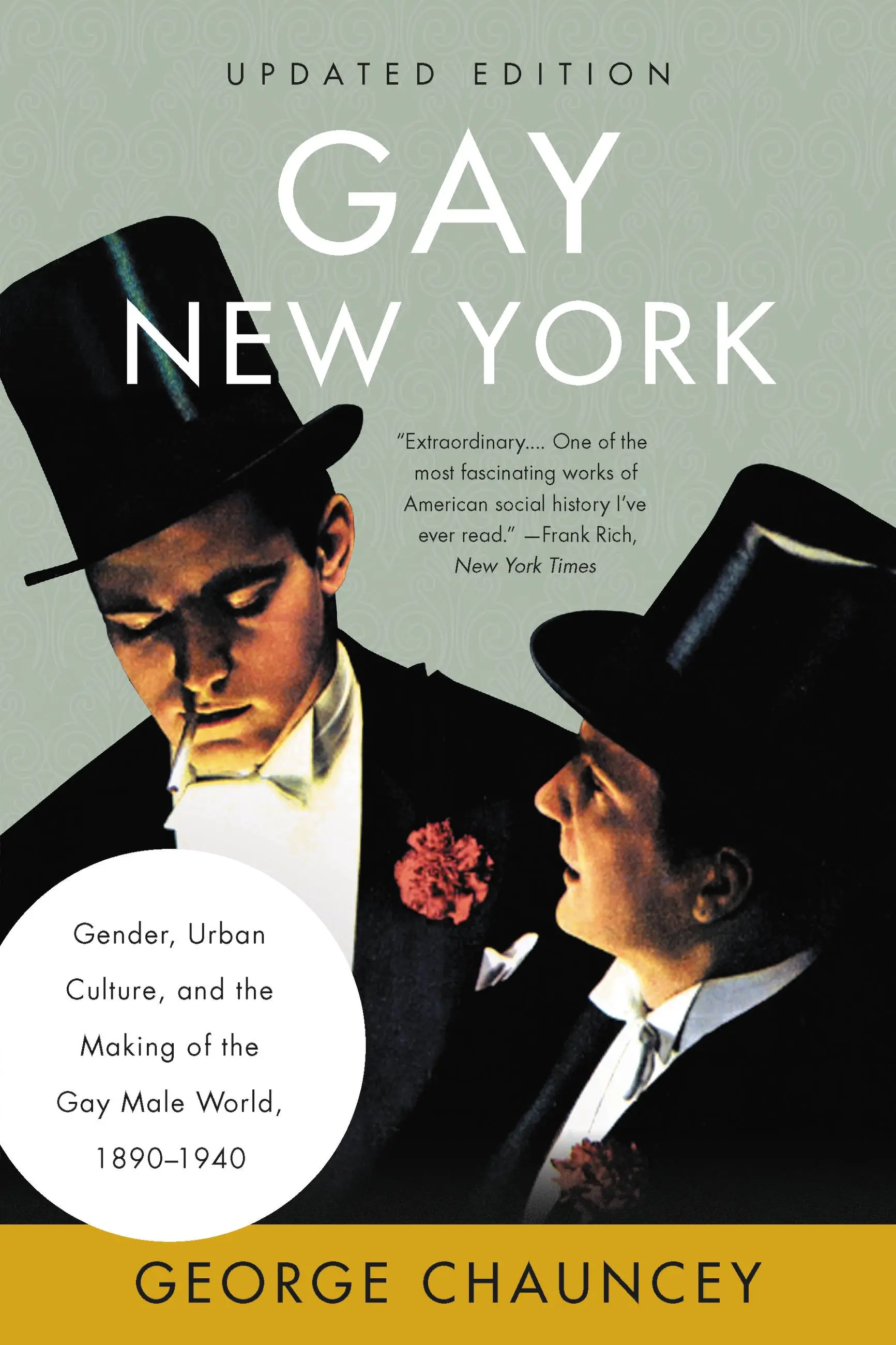
These days they might be identified as trans, nonbinary, gay, or crossdressers, but in turn-of-the-century New York, “fairies” defied those labels. This is their history, based heavily on George Chauncey’s groundbreaking book, Gay New York (Hatchette/Basic Books, 1994).
Who Were Fairies in Queer History?
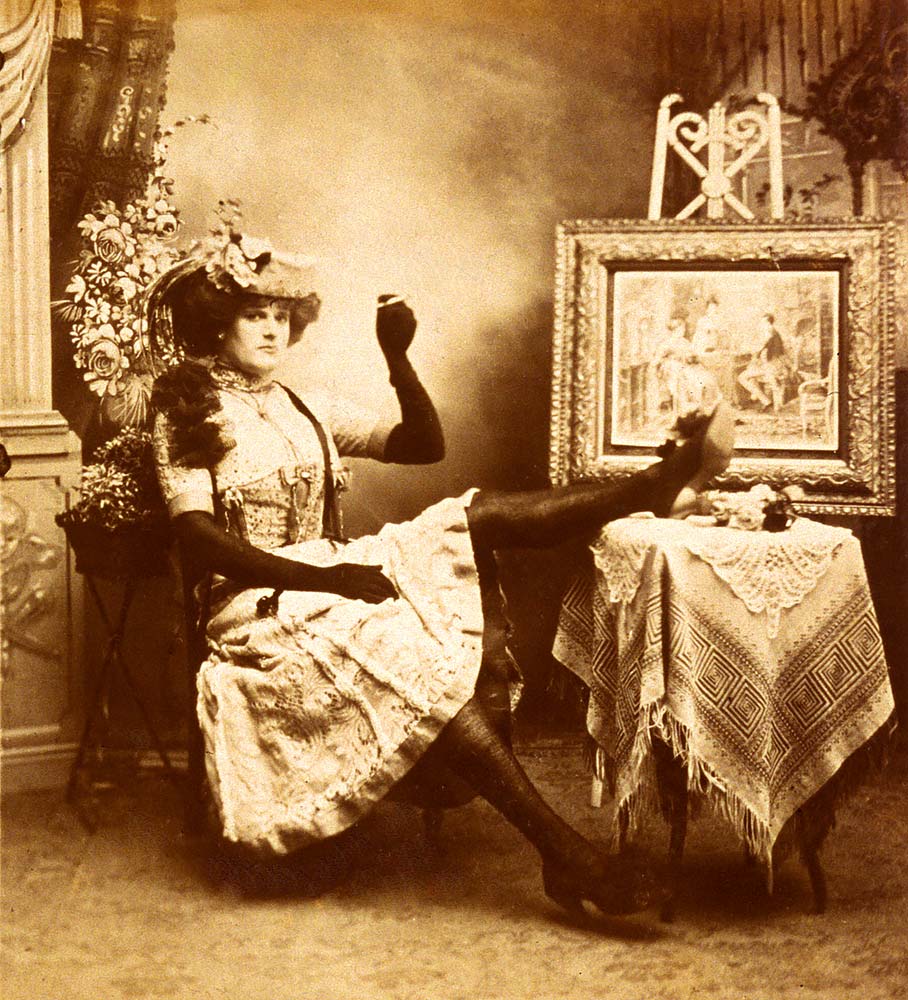
Historically, you were a “fairy” if you’d been assigned male at birth, presented femininely, and were interested in sex with men. Fairies often went by women’s names and she/her pronouns, although their gender presentation varied greatly. Many were sex workers so first-hand accounts from the time period often lump them in offhandedly with prostitutes.
Fairies worked in “degenerate resorts” with other entertainers, dancers, and sex workers. There, their queerness was marketed as a spectacle for upper class “slummers” interested in working class “depravity.” Still, they found havens together, providing one another with a supportive community and arguably formed the first transgender advocacy organization —called Cercle Hermaphroditos— in the USA. Fairies were the most visible and famous form of queer folk between roughly the 1890s and 1920s, especially in New York, but also in Chicago and other areas.
How Should We Interpret Queer History?
Queerness has always existed, but the words we’ve used to describe ourselves (and the words hurled against us) have always been inconsistent. It’s not just words, either, it’s frameworks.
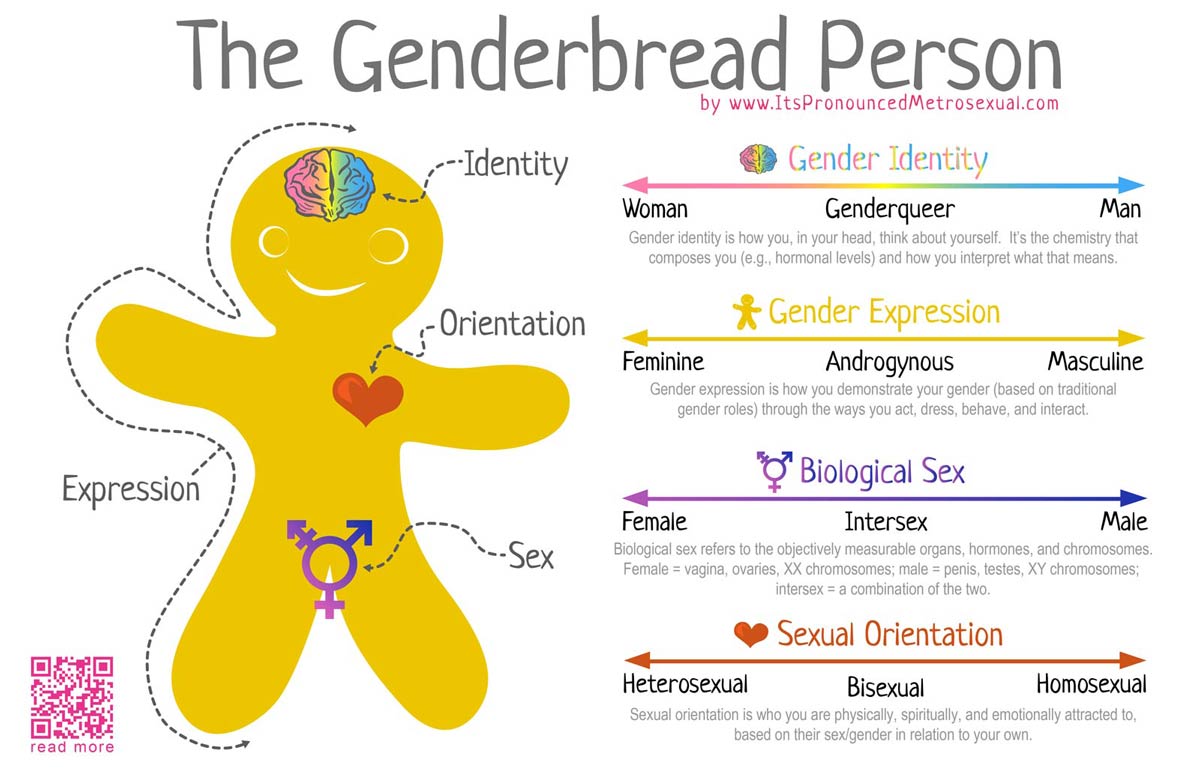
Currently, many in the U.S. understand gender, sex, and sexual orientation as three distinct categories (think Sam Killermann’s ‘Genderbread Person’ model). It’s normal to talk about queer people as being “born this way” but these are new (and contested) frameworks, not objective facts of life throughout history.
It may be comforting to imagine that queerness has always existed as it does now, but that’s just not the case. In fact, across cultures and time periods there’s been near infinite diversity in human experience, expression, and identification. Queer history is important not only for its ability to affirm our current lives and identities, but its power to open our minds to the boundless ways humanity can exist. Fairies are just one example of the beautiful diversity in our histories.
Thirtyish years later, Chauncey’s Gay New York, already feels painfully out of touch in some ways. He acknowledges it himself in the 2019 reprint’s preface.
Surely, this article, too, will feel awkwardly off-base in 2060. As you might have guessed from the fact that “fairy” is a literal slur, language here might get a bit dicey. Some quoted sources use language that may feel offputting from a modern lens. Keep an open mind and remember that preserving queer history is valuable despite its complications and imperfections.
Were Fairies Trans?
Fairies are undoubtedly part of trans history and they did not fit neatly in a men/women binary. Some in the Cercle Hermaphroditos called themselves "instinctive female-impersonators” and kept women’s clothes tucked away from the prying eyes of legal authorities. Many lived large chunks of their lives as “women-men” because it felt natural to them, wearing women’s clothes and going by feminine names and she/her pronouns. Generally, the category of fairy allowed for a contrast between one’s “cultural gender and anatomical sex.” At times, the struggles they faced are uncomfortably reminiscent of the violence and hateful rhetoric against trans people (women especially) today.
Still, claiming fairies were trans women, nonbinary, or even “queer” is a bit reductive. No one at the time called themselves “transgender” — that simply wasn’t a term yet. Even the terms that survived the past century have shifted unrecognizably in meaning. For example, many fairies considered themselves “bisexual,” a term which meant something entirely different at the time. Instead of referring to people attracted to multiple genders, “a bisexual was both male and female,” combining physical and mental traits of men and women.
To further complicate the issue, they were a diverse group without clear borders. One could be considered a fairy just for wearing a red necktie or having feminine mannerisms. While there were fairies that lived their lives, in essence, as women, many had identities which feel more in line with what we’d now call feminine gay men or drag queens. The truth is, even today many people’s lives and identities defy easy labels. Forcing historical figures (let alone whole groups) into current frameworks is imperfect at best. Still, we can respect fairies as an integral part of queer history: trans, gay, drag and beyond.
Were Fairies Accepted in Their Communities?
Though they were surprisingly accepted in turn-of-the-century New York, it would be a mistake to understand this era of history as exceptionally liberated. Anti-crossdressing laws abounded and consensual sodomy was a criminal offense in New York until much too recently. Still, fairies were generally seen as “an anomaly, certainly, but as more amusing than abhorrent.” Many primary sources about them come from non-queer folks of that era who’d reminisce, years later, about the fun they had living in turn-of-the-century New York amongst fairies, immigrants, and prostitutes.
Working class fairies lived openly in their communities. While middle and upper class society forced many into the proverbial closet, economically disadvantaged districts were havens of fairy life. Even more wealthy fairies would sneak off to crossdress in those parts of the city. They would pay off patrolmen and spend their days and nights barhopping, doing sex work, and hanging out together on the streets of the Bowery.
Were Fairies Seen as Women?
While they were a distinct gender group from women, they were generally understood as more woman than man. Popular science at the time saw them as “inverts” who, as one doctor argued in 1904, “were actually women.” Early pioneer of sexology Karl Urlichs described “inverts” as being “women’s spirit in a man’s body.”
It wasn’t just scientists who saw fairies as women, though. Men interested in them were not seen as gay. In fact, it was understood in working class culture that any “normal man” would be attracted to both fairies and women. It was common for everyday people to call them by women’s names and she/her pronouns, even when they weren’t wearing women’s clothes. In 1939, a man testifying in court casually called a fairy “she.” When asked to clarify why he used that pronoun, he said that they “addressed themselves by these effeminate names and refer to one another in the effeminate terms” before continuing on describing her as “she.”
Was Life as a Fairy Safe?
Unfortunately, like the queer and trans people of today, fairies were frequently victims of harassment and violence because of their identities. Living as a fairy meant losing what we might now call male privilege. As Chauncey puts it, “Mockery and contempt often colored the public interactions between men and fairies in the streets and Bowery resorts.”
They weren’t thought of as comparable to “respectable,” classy women. Socially speaking, they existed in almost the exact same social group as today’s cisgender female sex workers. They often dressed the same, acted the same, frequented the same places, had the same friend groups, did the same work and, unfortunately, faced the same threats. The technical term “pervert” was used to describe both groups because of their engagement in oral sex. Both dealt with conflicting feelings many queer people and sex workers can relate to today: “desire, contempt, fascination, abuse.”
Like other sex workers (and, during prohibition, those involved with speakeasies), fairies were looked down upon by upper and middle class society. They were frequent victims of police violence, making them easy targets for gangs, muggers and pickpockets. Sexual violence wasn’t as common as you might expect, but it was a real threat. It wasn’t just queerphobia— thieves and attackers knew they couldn’t go to police for help. Instead, they were forced to defend themselves.
How Fairies Found Freedom and Community
They had to look out for each other, and they did just that, forming an invaluable community. Although records are scarce, the fairy autobiographer Jennie June described an informal advocacy organization where self-described ‘instinctive female-impersonators,’ including androgynes, queens, fairies, or Uranians could gather and “feel more free to express themselves and socialize with similar people.” June’s autobiographies were influenced by her desire to combat suicide, a problem that’s still depressingly relevant to this day. Her writing, while speckled with language that can feel antiquated, is deeply moving nonetheless.
The threats didn't define them, though. Their lives were often casual, fun, and joyful. They worked at venues like Columbia Hall (AKA Paresis Hall) where they’d provide scandalous entertainment for upper class “slummers” looking for shocking, transgressive shows. But often, they’d just hang out with their friend groups. In 1912, a vice agent reported watching two fairies named Elsie and Daisy joking around with their friends, barhopping, and dancing together, “imitating the action of committing sodomy” and singing songs which “were obscene to the farthest limit.”
Remembering Fairies
Fairies might not fit neatly in boxes we have today, but it’s hard to learn their histories without seeing the connections. Like modern trans women, they faced social stigma in order to live authentically in a feminine role. They were desired for the very femininity that put targets on their backs. They were gawked at and made a spectacle through sensationalist journalism. And, like trans women and queer people in general, they found joy and connection nonetheless, celebrating their divergence from the norm and urging others to love and protect themselves despite it all.
Over a century later, that’s a message we carry with us and take time to remember every June. Happy Pride to everyone out there who needs it, even and especially those that don’t fit in the neat little boxes that society expects.