




.svg)
hat is actually happening with the Kim Kardashian sex tape lawsuit?
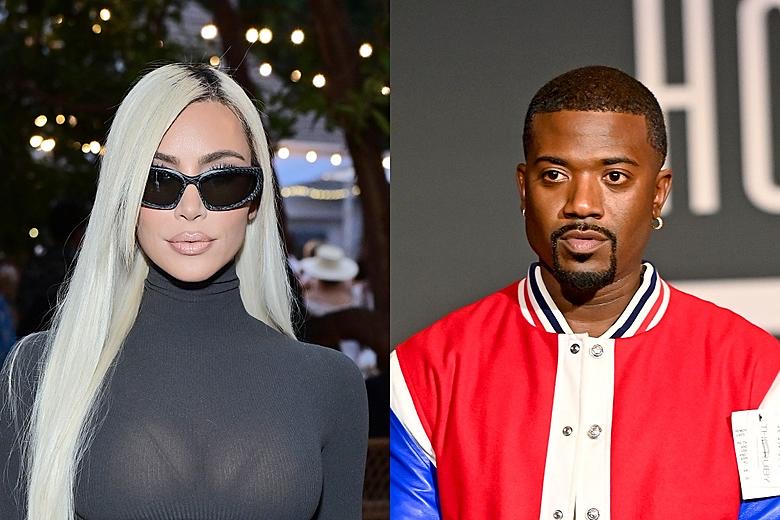
The current litigation traces back to a 2025 TMZ documentary about rapper Sean "Diddy" Combs, in which Ray J made statements suggesting Kim Kardashian and Kris Jenner were subjects of a federal racketeering investigation. The pair filed a defamation suit against him last October. Ray J countered in November with his own suit, alleging breach of a $6 million settlement agreement over the tape — and claiming that all three parties had worked together to release it consensually. His legal team is now arguing that Kardashian's sworn complaint is "demonstrably false," essentially accusing her of perjury.
In her declaration, Kardashian was direct: "My family and I are not part of a criminal enterprise. We have not conducted racketeering activity, nor have we profited from racketeer activities as the defendant claims." The specific claim she's refuting — that she and her mother staged a lawsuit against Vivid Entertainment as part of an elaborate PR scheme — has circulated in various forms since Canadian investigative journalist Ian Halperin included it in his 2016 book Kardashian Dynasty, in which he alleged a mutual friend had advised Kardashian that a sex tape would be the fastest path to fame, and that she and Kris engineered the release in conjunction with Vivid Entertainment behind the scenes.
Kris Jenner's sworn declaration is equally firm. "As a mother, the notion that I orchestrated or produced sex tapes involving my daughter, or was in any way involved in the creation or distribution of any sex tapes, is not only entirely untrue but deeply offensive and harmful," she wrote.
TMZ has reported that Ray J's version of events is considerably different: he claims the tape was shot consensually in 2003, that the two discussed releasing it in 2006, and that Kardashian specifically requested her mother oversee its commercial distribution. Kardashian has denied this version of events consistently for the better part of two decades.
What does the adult industry know that the public doesn't?
Quite a lot, as it turns out — and it starts with two words: Vivid Entertainment.
Vivid is not some fly-by-night operation running stolen content out of a server farm. It is one of the most established, legally rigorous adult distribution companies in the United States, with decades of industry history and a compliance infrastructure to match. And here is what every person who has ever worked in this industry understands immediately: Vivid would never — could never — distribute content without full 2257 documentation and signed model releases from every performer appearing in it.
18 U.S.C. § 2257 is the federal record-keeping requirement that governs all commercially distributed adult content in the United States. It mandates that producers maintain proof of age records for every performer, that those records be available for inspection, and that the content be labeled with the name and address of the custodian of those records. Violation carries serious federal penalties. No legitimate adult company touches content without it.
Which means the moment Vivid Entertainment's name appeared on that tape's distribution, the "leaked" narrative was, to anyone in the industry, immediately implausible. You cannot accidentally distribute content through Vivid. There is no scenario in which a legitimate company with Vivid's profile acquires stolen intimate footage, runs it through its legal and compliance process, obtains signed 2257 paperwork from both performers, secures model releases, and then puts it into commercial distribution — all without the knowledge or participation of the people on camera.
Every adult performer who has ever shot a scene knows exactly what the paperwork process looks like. You show your ID. You sign releases. You are documented, on record, as a consenting adult who agreed to the creation and distribution of this content. That process does not happen to you without your awareness. It requires your active participation.
The public has largely continued to accept the "leaked tape" framing for twenty years because most people have no idea how the industry actually works. The adult industry has never believed it — not because of gossip or speculation, but because of basic operational knowledge. The logistics of legitimate adult distribution make the leak story functionally impossible.
Did Kris Jenner orchestrate the release of Kim Kardashian's sex tape?
That is precisely what is now being litigated. Ray J's legal team is arguing that the coordinated release was a deliberate career strategy, that the lawsuit against Vivid was theater, and that Kardashian's current sworn denial constitutes perjury. Kardashian and Jenner are categorically denying all of it under oath.
What is not in dispute is that the tape was distributed by Vivid Entertainment through legitimate commercial channels — which, as anyone in this industry will tell you, requires the cooperation of the performers involved. The question being argued in court is not whether that cooperation existed. The question is who initiated it, who profited from it, and who is now lying about it.
Why does the Kim Kardashian sex tape still matter in 2026?
Because it never really went away — and because the stakes have changed entirely. This is no longer gossip or tabloid fodder. It is sworn testimony, competing legal claims, and a perjury accusation playing out in open court. Whatever the outcome, the case is a reminder that the sex tape was never just a cultural moment. It was a document — one with legal weight, financial consequences, and the kind of staying power that no PR strategy, however brilliant, could have fully engineered.
It is also, from the adult industry's perspective, a long-overdue public reckoning with how this business actually works. The "leaked sex tape" has functioned for two decades as a comfortable fiction — one that allowed a carefully managed content release to be reframed as victimhood, and that cast the adult industry itself as a passive vehicle for stolen material rather than what it actually is: a regulated, documented, legally rigorous commercial enterprise that does not distribute content without paperwork.
The industry has always known what the paperwork says. The courtroom is just finally asking.
Frequently asked questions: Kim Kardashian, Vivid Entertainment, and the sex tape litigation
What is 2257 documentation in the adult industry? 18 U.S.C. § 2257 is the federal law requiring all producers of commercially distributed adult content to maintain proof of age records for every performer. These records must be available for inspection and the content must be labeled accordingly. No legitimate adult distributor can release content without this documentation in place.
Why does Vivid Entertainment's involvement matter? Vivid is one of the most established adult distribution companies in the United States. As a legitimate commercial operation, it is legally required to obtain signed model releases and 2257 documentation from all performers before distributing content. The adult industry's position is straightforward: Vivid could not have distributed this tape without the performers' knowledge and consent.
What is Ray J alleging in his lawsuit? Ray J is alleging breach of a $6 million settlement agreement and claiming that all three parties — himself, Kim Kardashian, and Kris Jenner — consensually agreed to the tape's commercial release. His legal team is further arguing that Kardashian's sworn denial of this is perjury.
What are Kim Kardashian and Kris Jenner saying? Both have submitted sworn declarations categorically denying any involvement in orchestrating or consenting to the tape's distribution. Kardashian has denied this version of events consistently for nearly two decades.
What does the adult industry think actually happened? The adult industry's position has been consistent since 2007: the operational requirements of legitimate adult distribution make an involuntary "leak" through a company like Vivid Entertainment functionally impossible. Performers sign paperwork. They show ID. They are documented as consenting adults. That process cannot occur without their active participation.

