




.svg)
very spring, thousands of tourists descend on Kawasaki — a city just south of Tokyo that most people couldn't place on a map — to photograph themselves licking phallic lollipops and posing with a giant pink portable shrine. They post it, their followers laugh, and the algorithm rewards the absurdity. What almost none of them bother to mention is that the joke has a 400-year-old punchline, and it's actually pretty profound.
Kanamara Matsuri — literally "Festival of the Steel Phallus," though the international press long ago settled on "Penis Festival" because subtlety is dead — is held annually at Kanayama Shrine, a legitimate Shinto site with serious spiritual credentials. The shrine's deities preside over metalworking, fertility, safe childbirth, marital harmony, and reproductive health. This is not a novelty attraction that sprouted up to sell souvenirs to foreigners. The souvenirs came later. The tradition did not.

The origin story most commonly attached to the festival involves a demon with an unsettling habit of biting brides on their wedding nights — which, yes, is exactly as alarming as it sounds — and the villagers who commissioned an iron phallus to stop it. Symbolic? Sure. But the symbolism points toward something real: the idea that reproductive life, sexual health, and the bodies involved in both deserve protection, not shame.
What gets overlooked in most Western coverage is the shrine's historical relationship with sex workers. During the Edo period, women who worked in the sex trade visited Kanayama Shrine to pray for protection from sexually transmitted diseases and for safety in their work.
The festival itself is genuinely festive. The main event is a parade of mikoshi — elaborately decorated portable shrines carried through Kawasaki's streets — including the now-iconic bright pink one nicknamed "Elizabeth," which has become the visual shorthand for the entire event. The grounds fill with food stalls, ema plaques where visitors write their wishes, purification rituals performed by shrine priests, and yes, a remarkable quantity of penis-shaped candy. The atmosphere is celebratory in the way that Shinto festivals tend to be: communal, sincere, a little chaotic, grounded in something quite old and close to the heart of Japanese culture.
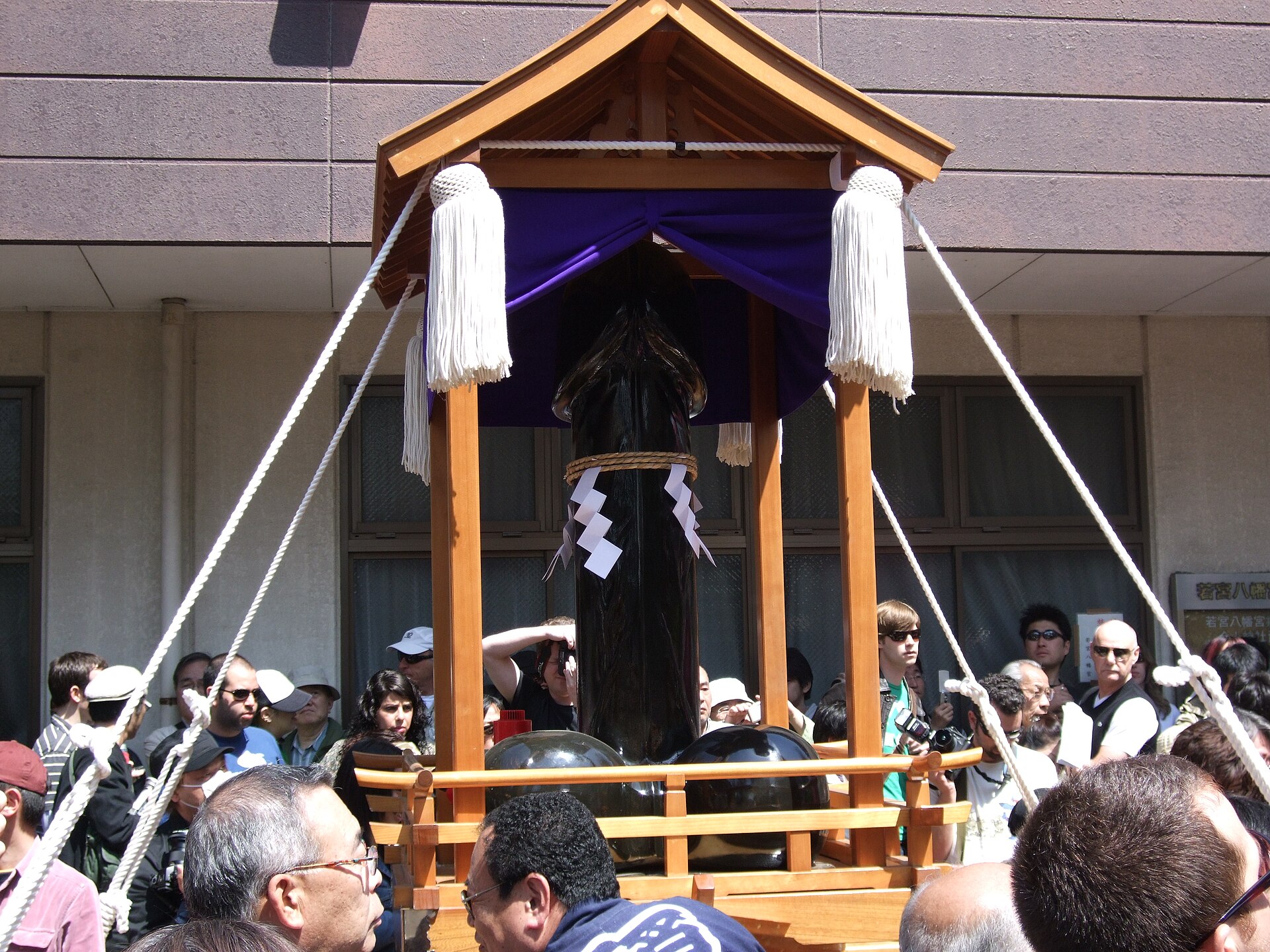
In recent decades, Kanamara Matsuri has formally aligned itself with HIV awareness and sexual health advocacy, with festival proceeds supporting related charitable work. Which feels like a natural evolution: from Edo-period sex workers praying at a fertility shrine to modern public health — the messaging is not actually that hard to follow, if you're paying attention.
The festival's Western reputation as a quirky bucket-list photo op says less about Japan than it does about the audience doing the looking. A culture that treats fertility, sexuality, and reproductive health as sacred rather than shameful — sacred enough to build a shrine, hold an annual festival, and invite the whole community — is doing something that plenty of more buttoned-up societies have never managed. The imagery is easy to laugh at. What it represents is harder to dismiss.

